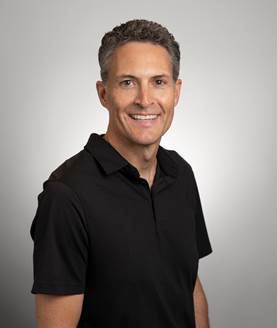
E. Christian Wells, Ph.D., AAAS Fellow
Department of Anthropology
University of South Florida
4202 East Fowler Avenue, SOC 107
Tampa, FL 33620-8100 USA
ecwells@usf.edu, 813/974.2337
I am professor in the Department
of Anthropology, director of the Center
for Brownfields Research & Redevelopment, and faculty fellow in Residential Learning
at the University of South Florida, where I have
served previously as the founding director of the Office of Sustainability and
as deputy director of the School of Global Sustainability. I am a Fellow of the
American Association for the Advancement of
Science, an Interdisciplinary Research Leader with the Robert Wood Johnson
Foundation, and Past-President of the Florida Brownfields Association,
the state’s largest nonprofit advocacy organization dedicated to brownfields
redevelopment.
I am an applied environmental
anthropologist with an interdisciplinary background in the social and natural
sciences. I maintain a diverse portfolio of research projects aimed at
improving human and environmental health outcomes of re/development efforts in
underserved communities. My current research emphasizes environmental
pollution, brownfields challenges, land use legacies, sustainable and equitable
development, water/wastewater management, and science-policy interactions.
Over the past 20 years, I have
undertaken research throughout the United States, Central America, and the
Caribbean with over $25 million in funding from the National Science
Foundation, the U.S. Environmental Protection Agency, and other organizations. I
have written or edited 10 books or journal issues and more than 150 scientific
articles and essays. My research has been featured by various media outlets
including The New York Times and New Scientist.
I am the recipient of the 2025 Comitas
Award for Social Innovation and Public Engagement from the Society for
Applied Anthropology, the 2024 Community Advocate Award from the
University Area Community Development Corporation, the 2023 Environmental
Justice Spirit of Excellence Award from the Florida Brownfields
Association, the 2023 Wesley W. Horner Award from the American Society
of Civil Engineers, and the 2011 Black Bear Award from the Sierra Club
of Tampa Bay “in recognition of outstanding dedication to sustainability and
the environment.”
From the University of South Florida,
I have received the 2024 Kosove Distinguished Graduate Teaching and Service
Award, the 2021 Faculty Outstanding Research Achievement Award, the 2019
Outstanding Faculty Award, the 2018 Outstanding Community-Engaged Teaching
Award, the 2018 Faculty Outstanding Research Achievement Award, the 2017 Global
Achievement Award for Outstanding Global Student Success, the 2012 Status of
Latinos Faculty Award, the 2011 Jerome Krivanek Distinguished Teacher Award,
and the 2007 Outstanding Undergraduate Teaching Award.
Select Recent Articles:
McAlister, M. M., P. S.
Murali, Q. Zhang, E. C. Wells, and S. Mohebbi. 2024. Improving and Quantifying
Organizational Resilience for Sustainable Management of Critical
Infrastructures: A Multi-level System Dynamics Approach. International
Journal of Disaster Risk Reduction 115:105079. https://doi.org/10.1016/j.ijdrr.2024.105079
Caballero, G. W., E. C. Wells,
S. A. Echols, and E. H. Peaslee. 2024. Environmental Justice from the
Ground(water) Up: Coping with Contamination in Tallevast, Florida. Local
Environment 29(6):722-735. https://doi.org/10.1080/13549839.2024.2325080
Webb, A. W., E. C. Wells,
C. Prouty, R. K. Zarger, and M. A. Trotz. 2024. Ethics and Ambiguity in
Wastewater Development in Placenica, Belize. Annals
of Anthropological Practice 48(1):130-145. https://doi.org/10.1111/napa.12215
Vidmar, A. M., E. C.
Wells, M. Zheng, N. Award, S. Combs, and D. Diaz. 2023. “That’s What We Call
‘Aesthetics,’ Not a Public Health Issue:” The Social Construction of Tap Water
Mistrust in an Underbounded Community. Human Organization 82(4):342-353.
https://doi.org/10.17730/1938-3525-82.4.342
Wells, E. C., A. M.
Vidmar, W. A. Webb, A. C. Ferguson, M. E. Verbyla, F.
de los Reyes III, Q. Zhang, and J. M. Mihelcic. 2022.
Meeting the Water and Sanitation Challenges of Underbounded Communities in the
U.S. Environmental Science & Technology 56(16):11180-11188. https://doi.org/10.1021/acs.est.2c03076
Abdel-Mottaleb, N., P. G.
Saghand, M. J. Wakhungu, H. Charkhgard,
E. C. Wells, and Q. Zhang. 2022. Identifying Critical Isolation Valves in a
Water Distribution Network: A Socio-Technical Approach. Water
14(21):3587. https://doi.org/10.3390/w14213587
Wakhungu, M., N.
Abdel-Mottaleb, E. C. Wells, and Q. Zhang. 2021. Geospatial Vulnerability
Framework for Identifying Water Infrastructure Inequalities. Journal of Environmental Engineering
147(9):04021034. https://doi.org/10.1061/(ASCE)EE.1943-7870.0001903
Alexander, W. L., E. C.
Wells, M. Lincoln, B. Y. Davis, and P. Little. 2021. Environmental Justice
Ethnography in the Classroom: Teaching Activism, Inspiring Involvement. Human Organization 80(1):37-48. https://doi.org/10.17730/1938-3525-80.1.37
Lehigh, G. R., E. C.
Wells, and D. Diaz. 2020. Evidence-informed Strategies for Promoting
Equitability in Brownfields Redevelopment. Journal
of Environmental Management 261(1):110150. https://doi.org/10.1016/j.jenvman.2020.110150
Libby, J. A., E. C.
Wells, and J. R. Mihelcic. 2020. Moving up the Sanitation Ladder while
Considering Function: An Assessment of Indigenous Communities, Pit Latrine
Users, and Their Perceptions of Resource-recovery Sanitation Technology in
Panama. Environmental Science &
Technology 54(23):15405–15413. https://doi.org/10.1021/acs.est.0c04120
Meehan, K., W. Jepson, L.
Harris, A. Wutich, M. Beresford, A. Fencl, J. London,
G. Pierce, L. Radonic, E. C. Wells, N. Wilson, E.
Adams, R. Arsenault, A. Brewis, V. Harrington, Y. Lambrinidou,
D. McGregor, R. Patrick, B. Pauli, A. Pearson, S. Shah, D. Splichalova,
C. Workman, and S. Young. 2020. Exposing the Myths of Household Water
Insecurity in the Global North: A Critical Review. WIREs Water 7(6):e1486. https://doi.org/10.1002/wat2.1486
Mohebbi, S., Q. Zhang, E.
C. Wells, T. Zhao, H. Nguyen, M. Li, N. Abdel-Mottaleb, S. Uddin, Q. Lu, M. J.
Wakhungu, Z. Wu, Y. Zhang, A. Tuladhar, and X. Ou. 2020. Cyber-Physical-Social
Interdependencies and Organizational Resilience: A Review of Water, Transportation,
and Cyber Infrastructure Systems and Processes. Sustainable Cities and Society 62:102327. https://doi.org/10.1016/j.scs.2020.102327
Wells, E. C., W. A. Webb,
C. M. Prouty, R. K. Zarger, M. A. Trotz, L. M. Whiteford, and J. R. Mihelcic.
2019. Wastewater Technopolitics on the Southern Coast
of Belize. Economic Anthropology
6(2):277-290. https://doi.org/10.1002/sea2.12145
Prouty, C., E. S. Koenig,
E. C. Wells, R. K. Zarger, and Q. Zhang. 2017. Rapid Assessment Framework for
Modeling Stakeholder Involvement in Infrastructure Development. Sustainable Cities and Society
29:130-138. https://doi.org/10.1016/j.scs.2016.12.009
Mihelcic, J. R., C. C.
Naughton, M. E. Verbyla, Q. Zhang, R. W. Schweitzer,
S. M. Oakley, E. C. Wells, and L. M. Whiteford. 2017. The Grandest Challenge of
All: The Role of Environmental Engineering to Achieve Sustainability in the
World’s Developing Regions. Environmental Engineering Science 34(1):16-41.
https://doi.org/10.1089/ees.2015.0334
Wells, E. C., R. K.
Zarger, L. M. Whiteford, J. R. Mihelcic, E. S. Koenig, and M. R. Cairns. 2016.
The Impacts of Tourism Development on Perceptions and Practices of Sustainable
Wastewater Management on the Placencia Peninsula, Belize. Journal of
Cleaner Production 111:430-441.
https://doi.org/10.1016/j.jclepro.2014.08.050
Select Recent Grants:
Combs, S., and E. C.
Wells. 2025-2028. “Brownfields to Healthfields: Catalyzing Transformational
Change in the University Area Community.” Community Change Grants program, U.S.
Environmental Protection Agency; $14,944,031. https://www.epa.gov/inflation-reduction-act/community-change-grants-selections
Jones, D., and E. C.
Wells. 2023-2027. “Brownfields Job Training Program for East Tampa.”
Brownfields Job Training Program, U.S. Environmental Protection Agency;
$500,000. https://java.epa.gov/acrespub/gfs/factsheet/12230
Ergas, S., E. C. Wells,
J. Mihelcic, M. Arias, Q. Zhang, M. Nachabe, and M. Lusk. 2023-2026. “Zombie to
Living Community Ponds by Novel Bio-infiltration.” Gulf of Mexico Program, U.S.
Environmental Protection Agency; $1,499,759. https://www.epa.gov/newsreleases/epa-announces-125-million-funding-environmental-justice-grants-program-gulf-mexico-0#:~:text=EPA%20plans%20to%20award%20approximately,closes%20on%20May%208%2C%202023.
Bolden, D., K.
Owusu-Daaku, and E. C. Wells. 2023-2025. “Using Transformative Scenario
Planning to Address Structural Racism in Health in North Port St. Joe,
Florida.” Interdisciplinary Research Leaders, Robert Wood Johnson Foundation;
$125,000. https://irleaders.org/team/using-transformative-scenario-planning-to-address-structural-racism-in-health-in-north-port-st-joe-florida
Trotz, M. A., E. C.
Wells, K. A. Alfredo, R. Sears, and M. E. Carrasquillo. 2022-2026.
“Collaborative Research: Challenging Anti-Black-Racism in Civil and
Environmental Engineering Curriculum.” Improving Undergraduate STEM Education,
National Science Foundation; $1,500,000. https://nsf.gov/awardsearch/showAward?AWD_ID=2142714
Wells, E. C., L. Ward,
and W. Washington. 2022-2026. “Community-wide Brownfield Assessment for
Tallevast, Manatee County, Florida.” Community-wide Brownfield Assessment Grant
Program, U.S. Environmental Protection Agency; $500,000. https://www.epa.gov/brownfields/applicants-selected-fy-2022-brownfields-assessment-rlf-cleanup-arc-grants-and-rlf
Jones, D., and E. C.
Wells. 2020-2022. “Environmental Workforce Development and Job Training Program
for East Tampa.” Environmental Workforce Development and Job Training Program,
U.S. Environmental Protection Agency; $200,000. https://www.epa.gov/brownfields/applicants-selected-fy20-environmental-workforce-development-and-job-training-grants
Wells, E. C., and S.
Combs. 2017-2019. “Brownfields Area-Wide Planning Project for the University
Area Community, Hillsborough County, Florida.” Brownfields Area-Wide Planning
Grant Program, U.S. Environmental Protection Agency; $200,000. https://www.epa.gov/brownfields/national-brownfields-area-wide-planning-grant-selected-proposal-descriptions
Zhang, Q., E. C. Wells,
S. Mohebbi, X. Ou, and Q. Lu. 2016-2020. “Integrative Decision
Making Framework to Enhance the Resiliency of Interdependent Critical
Infrastructures.” Critical Resilient Interdependent Infrastructure Systems and
Processes, National Science Foundation; $1,963,542. http://www.nsf.gov/awardsearch/showAward?AWD_ID=1638301
Mihelcic, J. R., E. C.
Wells, M. Trotz, and C. McKayle. 2013-2019. “Context Sensitive Implementation
of Synergistic Water-Energy Systems.” Partnerships for International Research
and Education, National Science Foundation; $3,920,644. http://www.nsf.gov/awardsearch/showAward?AWD_ID=1243510